On the sidelines of the 80th United Nations General Assembly in New York City, the Project Liberty Institute convened the first ITU-UNDP official “Digital@UNGA” affiliate sessions, titled Scalable Alternatives: Governance and Business Models for a Fair Data Economy.
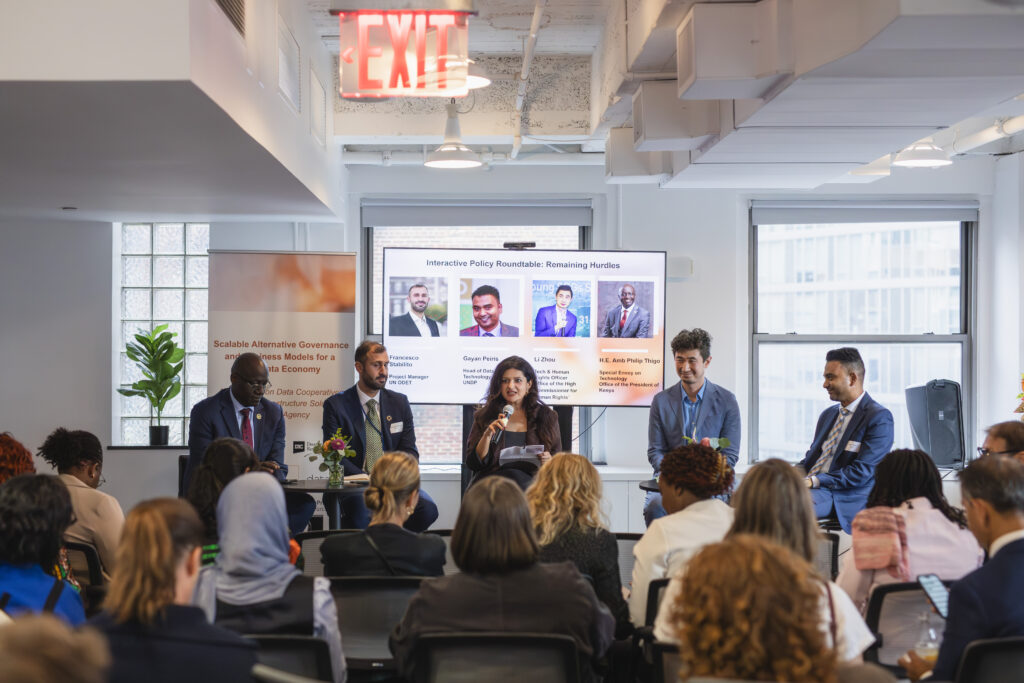
This dialogue was made possible through the global effort and collaboration of the Global Solutions Initiative, Aapti Institute, Global Partnership for Sustainable Development Data, Data2X, Decentralization Research Center, and Data Privacy Brasil.
Hosted at 1014 – space for ideas, the event brought together policymakers, academics, civil society leaders, funders, and innovators who are actively building a people-centered digital future.
Global Perspectives for a People-Centered Digital Future
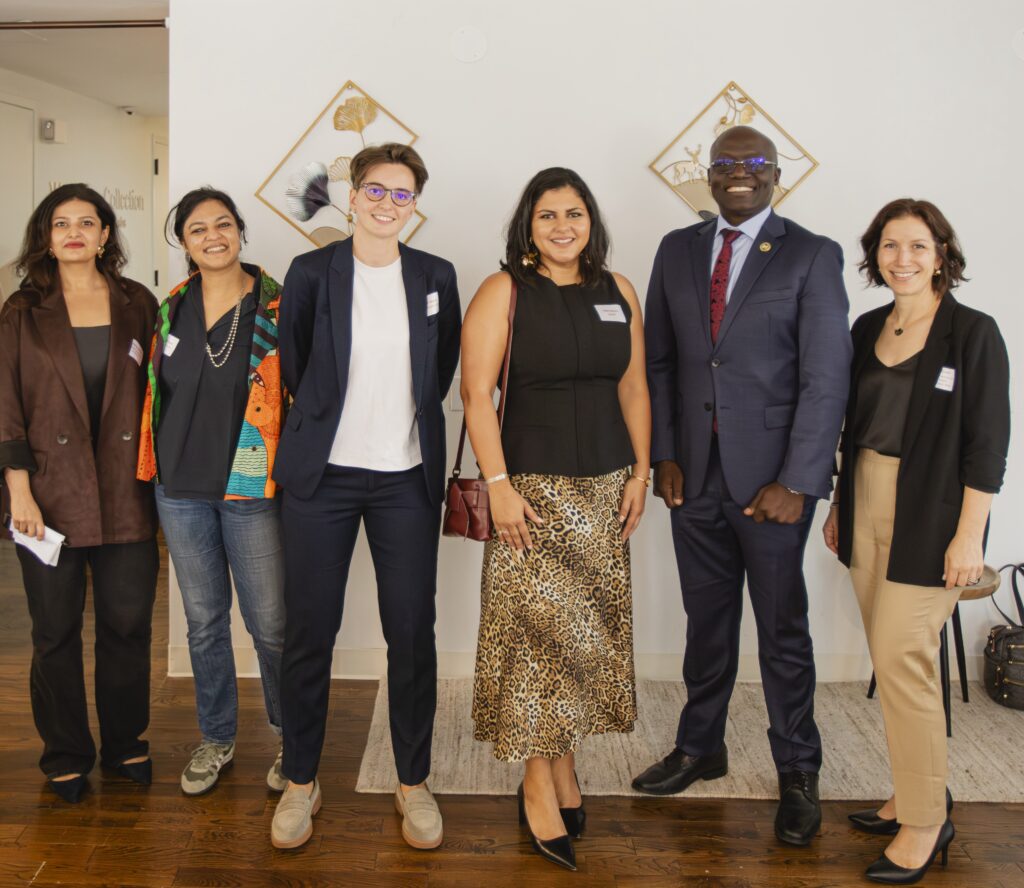
The discussions featured global leaders shaping digital governance, including:
- Ambassador Philip Thigo (Office of the Special Envoy on Technology, Kenya)
- Astha Kapoor (Aapti Institute)
- Douglas O’Brien (National Cooperative Business Association CLUSA International)
- Francesco Stabilito (United Nations Office for Digital and Emerging Technologies)
- Gayan Peiris (United Nations Development Programme)
- Jenna Slotin (Global Partnership Sustainable Development Data)
- Li Zhou (United Nations Human Rights B-Tech Project)
- Stefaan Verhulst (The GovLab)
From Siloed Use-Cases to Scalable Alternatives
The economy runs on data, yet the value it generates remains concentrated in a few hands. As AI accelerates demand for higher-quality data, the urgency for systemic change in how data is governed and shared has never been greater.
This session underscored a crucial insight: the current governance approach applies century-old cooperative principles to digital assets and government-led digital infrastructure, which was once designed for a very different world. The issue of scaling these models requires regulatory, financial, and cultural shifts.
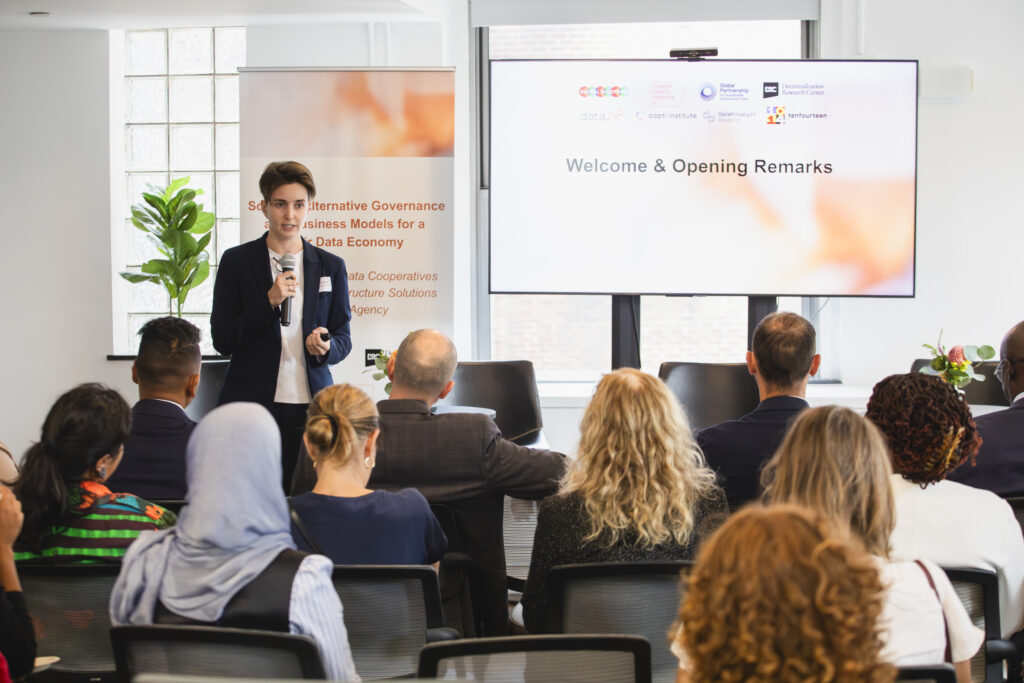
This challenge was captured in an article published by Tech Policy Press, How UNGA 80 Could Shift Power in the Data Economy, co-authored by Project Liberty Institute Policy & Research Manager, Sarah Nicole, together with our partners at Global Solutions Initiative and Decentralization Research Center.
At UNGA80, both policymakers, experts, funders, and innovators concluded that building a fair data economy requires giving people a voice, choice, and a stake in their digital lives.