On June 11, 2026, the OECD and its Global Partnership on AI (GPAI) invited Project Liberty Institute to present insights from its global work engaging limited partners and venture capital firms on responsible AI investing.
The invitation reflects the growing recognition that private markets will play an important role in shaping the future of AI. Over the past three years, Project Liberty Institute, together with partners including Reframe Venture, ImpactVC, Omidyar Network, UN B-Tech and others, has engaged more than 200 LPs and VCs representing over $6 trillion in capital across Europe, North America and Asia to advance how investors are navigating both the risks and opportunities associated with AI.
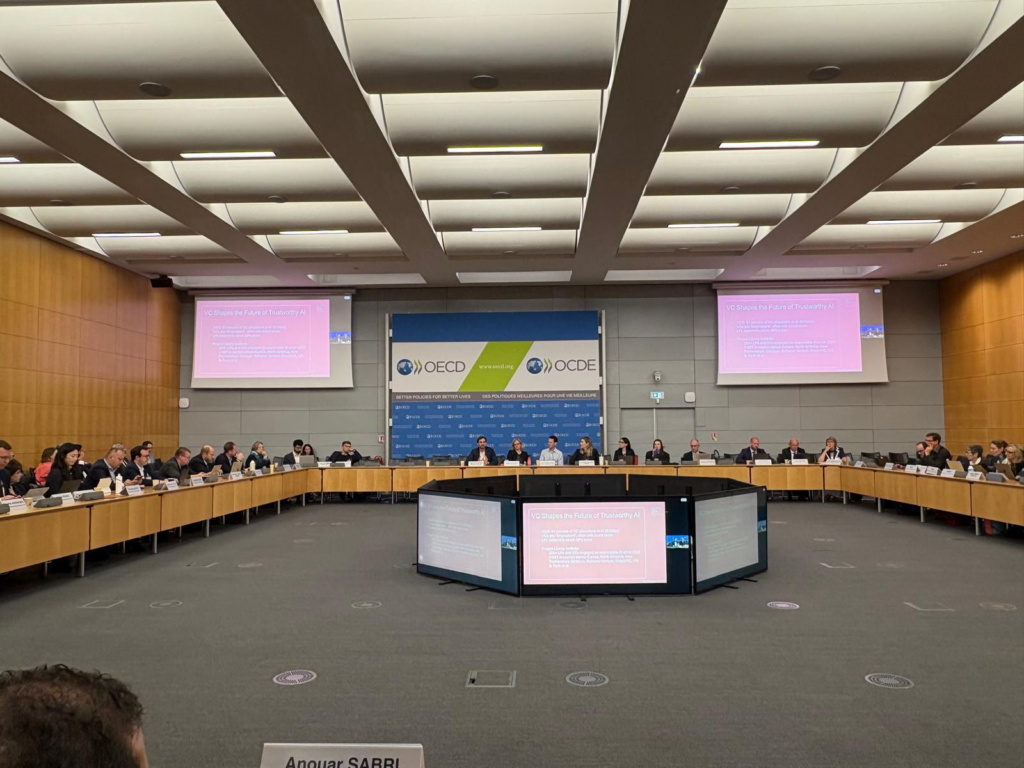
Paul Fehlinger (PLI) speaking about LP and VC AI trends at the OECD and Global Partnership on AI
At a moment when the OECD and GPAI are considering how to translate the OECD AI Principles and emerging international standards, including the G7 Hiroshima AI Process, into practical guidance for investors, they convened perspectives from across the investment ecosystem. Project Liberty Institute’s Senior Director of Policy, Investment & Innovation, Paul Fehlinger, joined Sophie Walker, who leads responsible AI at EQT, one of the world’s largest private markets investors, and Laurie Fitzjohn-Sykes of Omidyar Network to explore what drives investor decision-making on AI.
A central insight emerging from this work is that investors increasingly recognize the material risks associated with AI and the need to strengthen due diligence, governance and stewardship practices. At the same time, they are asking a complementary question: what should they invest towards?
The most interesting shift in our conversations with investors is that they are moving beyond seeing responsible AI solely through the lens of risk. Increasingly, they are asking where the next generation of enduring AI companies will be built, and whether trust, agency and transparency could become defining characteristics of the products and platforms that earn long-term adoption.
– Paul Fehlinger, Senior Director of Policy, Investment & Innovation, Project Liberty Institute
Findings from the global VC process led by Reframe Venture, Project Liberty Institute and ImpactVC, launched at the Responsible Investment Forum in New York and discussed again at SuperReturn Venture in Berlin, suggest growing interest in the market opportunity of trustworthy, human-centered AI. Nine out of ten venture capital firms surveyed reported seeing financial opportunity in a responsible AI stack, while also pointing to a lack of shared definitions and practical frameworks.
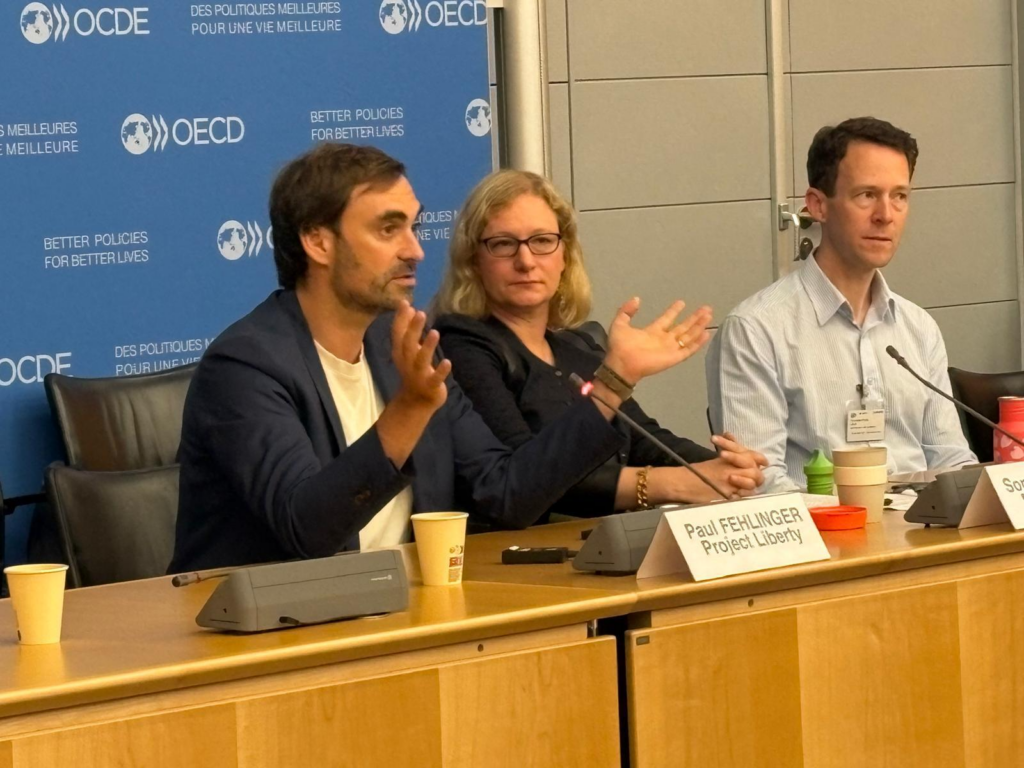
Paul Fehlinger (PLI), Sophie Walker (EQT) and Laurie Fitzjohn-Sykes (Omidyar and Investor AI Resource Hub)
Investors are increasingly attentive to demand signals emerging from governments seeking strategic autonomy and interoperability, enterprises looking for greater choice and control over data and AI systems, and citizens expecting greater transparency, agency and trust. Together, these signals may shape future markets and influence where capital flows.
Chaired by Sara Rendtorff-Smith, the OECD’s Head of Division for AI and Emerging Digital Technologies, the session brought together representatives from OECD Member States, GPAI stakeholders from industry, academia and civil society, and a delegation of parliamentarians from multiple countries.
Project Liberty Institute emphasized that while continued progress on AI risk management and governance remains essential, these conversations alone will not mobilize capital at scale. Increasingly, investors want to understand the investable opportunity: where demand for more trustworthy, human-centered AI is emerging, what signals governments, enterprises and citizens are sending to the market, and which technologies and business models are positioned to meet that demand.
As public and private actors articulate greater expectations around agency, transparency, choice and control, those preferences will increasingly shape investment decisions. Capital, in turn, can accelerate the development and adoption of technologies that respond to these needs, creating a reinforcing cycle between market demand, innovation and investment.
For Project Liberty Institute, the OECD discussions underscored both the progress made and the work ahead: building the capital and innovation flywheel required for a more human-centered AI economy.